Providing the Best for Our Youngest Newcomers

If you’re like most folks, when you hear the word ‘newcomer’ you likely envision an adult person bravely setting out to build a new life in a new place. Most of us realize the that inevitable challenges will come with acclimating to a foreign country, to surprising new social norms, to a foreign language and everything that beginning life in a new place might entail.

Some of us, though, may forget to consider what being a ‘newcomer’ might feel like to a young child.  If we haven’t had that experience ourselves, we likely can’t even imagine what it may encompass.  

  • What were the circumstances that led up to child’s family relocating in the first place?
  • What conversations did children overhear when decisions were being made by trusted adults?
  • What went through their little minds as bags were being packed or as a treasured trinket was being left behind?
  • Whom did they, perhaps, give one last kiss or hug goodbye to as they left what they knew as ‘home’?
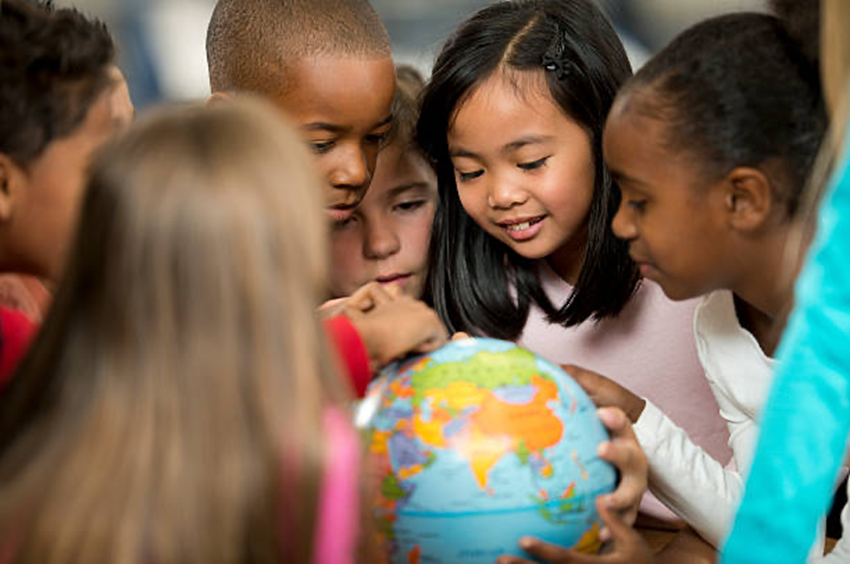
Through the eyes of a young child, the emotional toll of that the journey …whether on foot, or by plane or boat…might be something that we’ve not spent much time wondering about. What we canbe certain of, though, is that every child living in the US, no matter how they may have arrived in this country of ours, will attend our schools. And while as educators we can’t control our students’ family dynamics, how they’re received by politicians or by their new next-door-neighbors, we CAN control how they’re received and supported in our schools and in our classrooms.

We’ve been charged with the task of meeting   ALL of our students ‘where they are,’ academically and even socially, and to provide multiple opportunities for them to  learn and to thrive. Helping our students to feel safe, secure and valued all while providing a platform for academic success is what every educator strives for and wants to do well. Not a minor responsibility by any means!

Let’s talk academics from the vantage point of a young, early elementary newcomer. Learning to hear sounds in English, phonics & phonemic awareness, rhyme, conversational skills that over time will lead to reading and writing, concepts about print, high frequency words, new vocabulary and numerous other foundational literacy skills are all a ‘must’. It’s no secret that into today’s schools every content area revolves around being able to listen, to speak, to read, to write, and to comprehend. Now let’s talk social interaction. Newcomer children often are apprehensive when it comes to the ‘unknown’. After all, even under the best of circumstances, they’ve very likely just experienced some level of uncertainty, confusion and perhaps even fear. Maybe they’ve even stood by and witnessed their own parents or grandparents as they felt some confusion and fear, too!  How about anxiety that might come with the prospect of making a new friend when they aren’t quite sure how to introduce themselves or to confidently name simple words in that other child’s language? Phew! Where to begin?

Believe it or not, there’s an Oral Language Acquisition program out there that addresses all of this, and it’s called GrapeSEED. “All of this, really? Come on!’, you may be saying to yourself. Yes, all of this. Through thoughtfully created student centered GrapeSEED units and daily Lesson Plans that include joy infused & interactive songs, stories, chants, action activities, shared reading poems, big books and more, GrapeSEED students quickly acquire immediately useful vocabulary and language expressions that will boost their confidence, have them interacting in English and growing in their literacy related learning at an unexpected pace. Your English Language Learners will grow as they engage during their daily teacher-led lesson and with their student app. And guess what else? A GrapeSEED Coach/Professional Learning Specialist will be there to support you every step of the way.

Want to learn more about GrapeSEED?  Just click here!
August 17, 2026
The first few weeks of school have always mattered, but this year they may be more important than ever!
#BackToSchool2026 #ClassroomCommunity #StudentBelonging #SEL #DifferentiatedInstruction #StudentEnga
August 3, 2026
The first few weeks of school have always mattered, but this year they may be more important than ever!
May 25, 2026
Kindergarten is a big step in a child’s learning journey. It’s a time of exciting growth, discovery, and new routines. For families and educators of PreK and Young 5s children—including multilingual learners—preparing for this transition can help set the stage for a confident and joyful start to school. What Does “Kindergarten Ready” Mean? Kindergarten readiness is more than knowing letters and numbers. It includes a wide range of skills that help children feel safe, connected, and capable in a classroom environment. These skills include: Social & Emotional Skills : Can your child follow directions, express emotions, take turns, and ask for help? Language & Communication : Are they comfortable speaking and listening, even in their home language? Early Literacy & Math : Can they recognize some letters, numbers, and perhaps write their name? Motor Skills : Can they hold a pencil, use scissors, and manage clothing zippers or buttons? Supporting Multilingual Learners Children who speak more than one language bring unique strengths to the classroom! Here’s how we can support them: Honor Their Home Language : Encourage families to keep speaking and reading in their home language. A strong foundation in one language supports learning in English. Build Vocabulary : Use real-life experiences—grocery shopping, playing at the park, cooking—to teach and repeat new words in both languages. Create a Welcoming Environment : Use visuals, gestures, and routines that help all children understand and participate.  Simple Ways to Prepare at Home Read Daily : Share books in any language. Talk about the pictures and ask questions. Practice Routines : Try morning and bedtime routines similar to what they’ll experience in kindergarten. Talk Often : Describe what you’re doing, ask open-ended questions, and give your child time to respond. Play Together : Board games, pretend play, puzzles, and outdoor play build thinking and social skills. A Partnership Between Home and School Kindergarten readiness is a team effort. When teachers and families work together—especially in support of multilingual learners—children gain the confidence to thrive. Each child develops at their own pace, and readiness is not about perfection, but progress. Let’s celebrate every small step on the path to kindergarten! At GrapeSEED, we’re all about supporting children as they develop and prepare for their own next steps in their education journeys. Learn more about us by clicking here and consider getting started today!
May 4, 2026
For teachers of multilingual learners, one of the most powerful tools for teaching English is something you already use every day: your body! Movement and physicality can unlock understanding and make language memorable for learners. One highly effective approach is Total Physical Response (TPR) , a method developed by Dr. James Asher that connects language with physical actions. What is Total Physical Response (TPR)? TPR is a teaching method where teachers give commands in English and students respond with physical actions. For example, when you say, "Stand up" or "Open the book," learners act it out. This approach mirrors how children learn their first language—through listening and doing before speaking. Discover how using movement and physical actions can make English come alive for multilingual learners. This short guide shows you how Total Physical Response (TPR) builds confidence, comprehension, and classroom energy—without needing any extra materials Why Use TPR? Supports comprehension : Physical actions give students visual and kinesthetic clues to understand meaning. Reduces stress : There’s no pressure to speak right away. Learners can participate by simply listening and moving. Builds memory : The body helps the brain remember. Actions anchor vocabulary and structures in long-term memory. Engages learners : Movement keeps energy high and focuses attention, especially with younger students or those new to English. Discover how using movement and physical actions can make English come alive for multilingual learners. This short guide shows you how Total Physical Response (TPR) builds confidence, comprehension, and classroom energy—without needing any extra materials. How to Use TPR in the Classroom Start simple : Begin with everyday commands—sit down, stand up, raise your hand, touch your nose. Demonstrate each one clearly. Repeat and vary : Use repetition but change the order or speed to keep it fun. Add new vocabulary : Introduce verbs, classroom objects, or actions related to topics—run, jump, draw, point to the window. Involve students : Let them give commands once they’re ready. This encourages speaking without pressure. Use it across subjects : Combine TPR with songs, stories, or content lessons like science and math to support language across the curriculum. Movement is not just a break from learning—it is learning. When student teachers use TPR and physicality in English instruction, they make language come alive. Whether you're teaching young learners or newcomers of any age, using your body to teach builds confidence, comprehension, and connection. So next time you plan a lesson, don’t just say it— show it, move it, and live it . GrapeSEED’s Daily Lesson Plans each include movement called “Action Activities”. Learn more about these Action Activities, our other components, and how to get started with GrapeSEED in your classroom !
Show More