
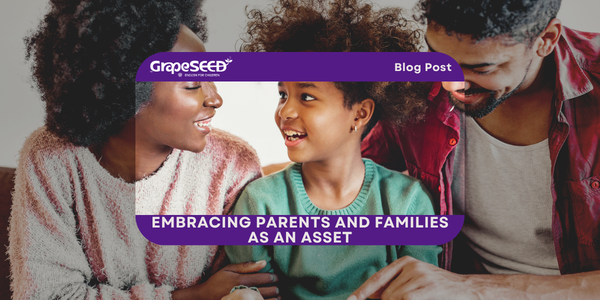
Embracing Parents and Families as an Asset

February 2nd, 2026

With the new school year now in full swing, continuing to build a community that fosters a sense of belonging is so valuable. There are lots of great ways to tackle this goal throughout the year, but one of the best ways can be through including the unique backgrounds of your students’ parents and families. When you intentionally invite their parents and families into the classroom to share things like heritage food, clothing, language, and culture, your little learners experience a very rich sense of belonging. In addition, their classmates learn to embrace diversity in all of its forms. In today’s article we will discuss the importance of using parent and family background as an asset and the benefits that come along with it.

Share distinct cuisines

Sharing food is a universal way to bring people together, and it can be an excellent avenue to celebrate different cultures. Invite parents to bring in dishes from their country of origin and share them with your students. This can be an opportunity for students to try new foods and to learn about backgrounds other than their own. This experience could impact student learning in a number of positive ways and could easily lead to activities like creating simple Venn diagrams and graphs when discussing different ingredients used in certain dishes or creating class cookbooks with recipes from each child’s home!

Experience language

Teaching simple words in a heritage language is a valuable way to help your students feel more connected to their family's cultural roots. Even if their parents or grandparents don't speak their native language fluently, they may know some basic phrases or words that they can share with the class. For example, if you have a student whose family speaks Spanish, you might invite their parent or grandparent to the classroom to teach the class some basic words and phrases in Spanish, such as "hola" for "hello" or "adiós" for "goodbye." You can also get creative with this activity by playing games or having students practice their skills with each other. This activity serves not only to deepen your students' connection to their heritage but also to promote bilingualism and multilingualism.

Put on a multicultural fashion show

Another way to invite families into the classroom is to have a day where students can try on traditional clothing. This activity is particularly fun for children who have grown up in a multicultural household but have never had the opportunity to explore their family's cultural traditions. You might ask parents to send in traditional clothing or headwear, and students can take turns dressing up and sharing about the cultural significance of the clothing. This activity not only allows children to learn more about their own cultural heritage but also allows students to learn about and appreciate the cultural traditions of their classmates.

Build on strengths

It’s very likely that your students’ parents have strengths that they would be honored to share with the class. In many cases, you would likely be surprised with the roles and skills that folks have and used either professionally or personally in their home countries. Perhaps a father was the well-known tailor who owned his own fabric shop and would love to come in to teach a small group to sew once a week, or a mother was a dentist before moving to the United States and would love to visit to teach about dental health. Capitalize on the talents and gifting that your families have and may even be hiding! The pride and confidence that will grow in their sons and daughters is immeasurable and the whole class will benefit.

Develop empathy

Another benefit of embracing diverse family cultures in the classroom is that it can help students to develop empathy and a sense of compassion for others. By learning about different cultures, children can better understand and appreciate the struggles, triumphs, and histories of people from different backgrounds. Whether shared through parents and families of preschoolers or high school seniors, this can lead to a greater sense of understanding among classmates, which is essential for building a sense of community in the classroom.

Communicate with clarity

In addition to food and clothing, parents and families from different cultures likely have different approaches to discipline and communication styles. As you welcome parents into the classroom, you’ll learn how to communicate and work with them in ways that are culturally sensitive. This will undoubtedly help build stronger relationships between yourself, your students, and their families, which ultimately enhance student outcomes!

Needless to say, parents and families can be such an asset in the classroom as they help create a vibrant and inclusive community. So, invite them in! You’ll be so glad that you did.


GrapeSEED appreciates family involvement, which is why our English language curriculum includes a student app that children can use at school AND at home and is why the student app features a parent portal. Want to learn more? Click here!

March 2, 2026
Have you noticed that the month of March brings a noticeable and welcomed shift? Daylight sticks around a bit longer, schedules fill with activities, and students arrive at school each morning with a renewed sense of energy. For young multilingual learners, springtime provides a powerful opportunity; not to reinvent instruction, but to lean into what already works and let that momentum carry learning forward. By this point in the school year, students have built familiarity with classroom routines and expectations. This consistency is especially important for language learners because predictable structures—songs, chants, stories, movement, and daily oral practice—create a safe environment where students feel confident participating, even when the language feels challenging. In March, that confidence often begins to show more clearly! In March, teachers are noticing students: joining in more quickly using phrases spontaneously engaging more willingly in partner activities These moments can be easy to overlook, but they are significant indicators of language growth. Oral language development doesn’t always arrive in neat, measurable steps…it emerges through repeated exposure, joyful practice, and meaningful interaction over time. As spring energy rises (spring fever, anyone?), maintaining consistent routines can actually help classrooms feel calmer and more productive. Students know what comes next, how to participate, and what success sounds like. Rather than pulling back on structured language practice, this is the moment to protect it. Daily routines…spoken language, movement, music, and shared stories…anchor learners while giving them space to take risks. March is also a reminder that language learning is cumulative. The repetition that felt slow in the fall often pays off in the spring, when students are ready to use what they’ve internalized. When instruction continues to spiral skills like phonemic awareness, vocabulary, comprehension, and oral fluency, students are supported without feeling pressured. As the school year speeds up, this is the perfect time to take a deep breath and to notice progress. So, take time to celebrate participation, effort, and small breakthroughs to help your multilingual learner students see themselves as the capable language learner they are, and encourage them to keep moving forward! Are you ready to learn more about how GrapeSEED can help your multilingual learners succeed in ways big and small?
February 16, 2026
February is a unique moment in the school year: routines have been established, students are settled, and teachers can clearly see areas of growth as well as emerging needs. It’s also a natural pause before the busy spring months. All of this makes February an ideal time to reflect and to look ahead. For multilingual learners, what happens after the school year ends matters more than we often realize. The Summer Learning Opportunity Extended breaks can unintentionally slow language development, particularly in listening, vocabulary, and verbal confidence. However, when summer instruction is intentional and well designed, it can do more than maintain progress—it can accelerate it. The key is ensuring summer learning feels inviting, engaging, and developmentally appropriate. What Works for Young Language Learners Effective summer language programs share common elements that support growth without feeling like “more school”: A low-stress environment where students feel comfortable taking risks with language Consistent exposure to English through stories, songs, shared reading, and movement Natural repetition and routine that strengthen foundational English language skills Multi-sensory learning experiences that keep students engaged and motivated When language is experienced rather than practiced in isolation, children remain curious, confident, and connected. Why February Is the Time to Think Ahead February isn’t about making immediate decisions—it’s about asking the right questions: How can summer learning support language development without burnout? What experiences will help students feel successful and excited to learn? How can summer instruction align with the strengths of our school-year approach? Exploring these questions now allows schools to plan thoughtfully rather than reactively. A Season for Planting Ideas Strong summer programs build on what young learners love most—music, stories, movement, and interaction—while quietly reinforcing the language skills they need to grow. February offers the space to imagine a summer experience that supports continuity, confidence, and joyful learning long after winter fades. Ready to learn how GrapeSEED can be a meaningful part of your school’s summer learning?
February 3, 2026
If you’re an elementary teacher working with multilingual learners, you already know your work is full of heart, hustle, and highlighters. But let’s be honest—supporting language learners takes a lot of energy. That’s why self-care isn’t a luxury. It’s a must. You’re juggling language development, academic growth, cultural connection, and emotional support. And while your students are growing every day, you need time to recharge, too. Here’s a quick self-care recipe to keep your cup full: ๐Ÿงก Smiles: Find Joy in the Little Things Celebrate the small wins: a new vocabulary word, a student’s laugh, a kind moment. Write one highlight on a sticky note each day. It’s a mood booster—and a reminder that you’re making a difference. ๐ŸŽ Snacks: Fuel Your Body (and Soul) Don’t skip lunch! Keep a stash of healthy snacks (and maybe a treat or two) nearby. Food is fuel, and sometimes chocolate is emotional first aid. ๐Ÿง  Sanity: Protect Your Peace Say no to that extra committee if you’re overwhelmed. Take 5 minutes to breathe or stretch between lessons. Step outside during a break of any kind, even for just a second or two. Talk to someone who “gets it”—sharing helps lighten the load. You Matter Your students need you AND they also need you to be okay. When you take care of yourself, you’re showing them how to care for themselves, too. So go ahead, teacher: smile, snack, and protect your sanity. You can’t do it all , but you CAN do a lot more when you’re well. At GrapeSEED English for Children, we value teachers and work to make certain that those using our curriculum feel supported. With a personal Professional Learning Specialist that teaches can communicate with anytime, a teacher portal, on-demand PDs and so much more, we’ve got our teachers covered! Ready to learn more about getting started with GrapeSEED in YOUR classroom? Just click here for more information.
January 20, 2026
January is the season of decluttering, but in schools, it’s about clearing space for what truly matters! This month’s blog explores how thoughtful organization supports multilingual learners and why strong language systems are worth keeping. A little clarity now can create momentum that lasts all year… and beyond!
Show More